Buying a property is one of the biggest financial decisions most people make. Whether you are purchasing your first home or investing in a residential project, you want to know that your money, property, and future plans are protected as much as possible.
This is where RERA registration becomes important.
The Real Estate (Regulation and Development) Act, 2016, commonly known as RERA, was introduced to improve transparency and accountability in India’s real estate sector. It created a regulatory framework for eligible real estate projects and established important rights and protections for homebuyers.
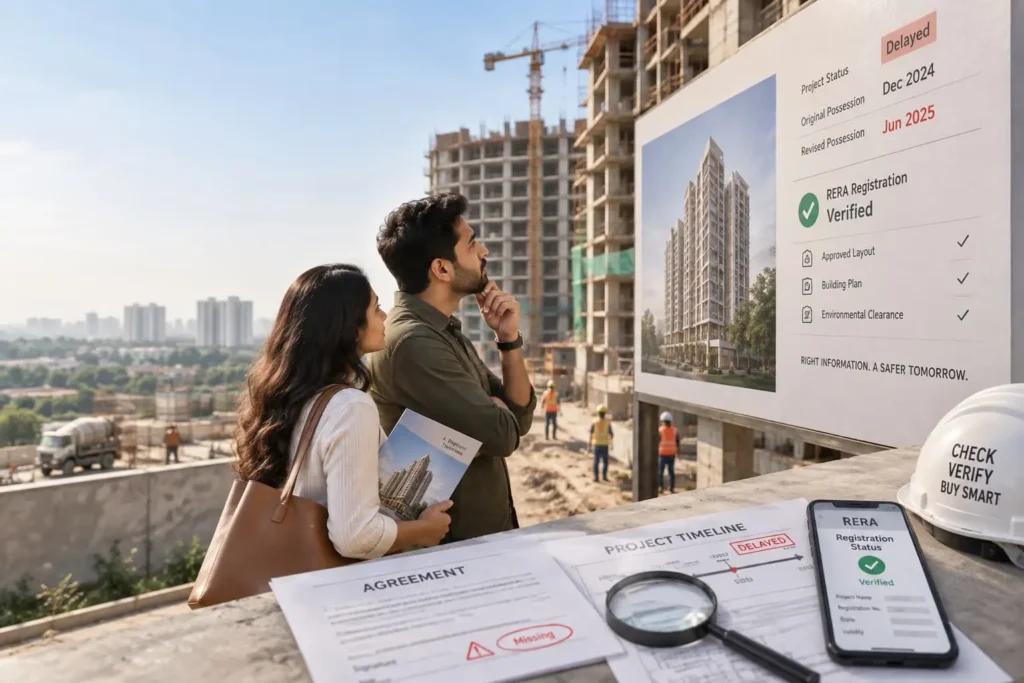
For a homebuyer, checking whether a project is RERA registered can be an important part of property due diligence. Homebuyers can verify project information through the official RERA authority website for the state where the property is located. It allows you to access project-related information through the relevant regulatory authority and make a more informed decision before committing your money.
In this guide, let’s understand why RERA registration is important when buying a property, what buyers can check, and how it can help you make a more confident property purchase.
What Is RERA Registration?
RERA registration refers to the registration of an eligible real estate project with the appropriate Real Estate Regulatory Authority under the RERA framework.
Promoters of projects covered by the Act are generally required to register their projects with the relevant state or union-territory RERA authority before advertising, marketing, booking, or selling them, subject to applicable exemptions and requirements.
Once a project is registered, important project information is made available through the relevant regulatory system. This can help prospective buyers verify information before making a purchase.
The exact registration requirements, exemptions, procedures, and implementation can vary by state.
Why RERA Registration Is Important for Homebuyers?
RERA registration is important because it promotes greater transparency between developers and homebuyers.
Here are some of the key reasons buyers should pay attention to it.
1. It Improves Transparency
One of the biggest advantages of RERA is increased transparency in real estate transactions.
For a registered project, buyers can generally find important information through the relevant RERA authority, such as:
- Project registration details
- Promoter information
- Project location
- Approved project-related information
- Development and construction details
- Declared completion information
- Other disclosures required under the applicable framework
This information can help buyers compare what the developer is offering with the information officially disclosed for the project.
Before buying a property, it is always a good idea to verify important claims instead of relying only on advertisements or verbal promises.
2. You Can Verify the Project and Developer Details
A RERA registered project has a registration record with the applicable regulatory authority.
This provides homebuyers with another source for checking project information before making a purchase.
For example, you can compare the project’s advertised details with the information available on the official RERA portal.
If you notice differences between what is being promised and what has been officially disclosed, you can ask the developer for clarification before proceeding.
This simple verification step can help buyers make better-informed decisions.
3. It Helps Buyers Understand Project Commitments
Property advertisements often highlight attractive features such as amenities, specifications, possession timelines, and project facilities.
RERA-related disclosures can provide additional information about the project and its development.
This doesn’t mean that every project-related dispute automatically disappears because a project is registered. However, having officially disclosed project information gives buyers a useful reference point when evaluating the property.
Before booking, buyers should carefully review the relevant documents and compare them with the developer’s promises.
4. It Provides Greater Accountability for Developers
RERA established a regulatory framework under which covered developers and projects have specific obligations.
The objective is to make real estate transactions more transparent and promote greater accountability.
For homebuyers, this means the developer is not operating entirely outside a regulatory framework when dealing with a covered RERA-registered project.
If a dispute arises, eligible buyers may have a mechanism to approach the relevant RERA authority, depending on the nature of the issue and applicable law.
5. It Can Help With Possession-Related Issues
One of the biggest concerns for property buyers is delayed possession.
A buyer may plan their finances, rental arrangements, and family commitments based on the expected possession timeline.
RERA contains provisions relating to the promoter’s obligations concerning completion and possession, subject to the agreement and applicable circumstances.
If a covered project faces a possession-related dispute, a buyer may have the right to seek an appropriate remedy under the applicable RERA framework.
However, buyers should always examine the agreement for sale and the specific facts of their case rather than assuming that every delay has the same legal outcome.
6. RERA Helps Promote Proper Disclosure
Real estate purchases involve large amounts of money. Buyers therefore need reliable information before making a commitment.
RERA’s regulatory framework requires promoters of covered projects to make specified disclosures and comply with applicable requirements.
This can make it easier for prospective buyers to research a project before booking a property.
The more information a buyer can verify, the easier it becomes to identify questions that should be clarified with the developer.
7. It Can Help Protect Buyers From Certain Unfair Practices
RERA introduced several provisions intended to protect the interests of homebuyers.
For example, the Act contains provisions concerning project advertising, agreements for sale, possession, alterations to sanctioned plans, and other promoter obligations.
The protections available to a buyer depend on the circumstances and applicable law, but the regulatory framework gives buyers important rights and remedies to consider.
This is one reason why checking RERA registration before buying property should be part of your due diligence process.
8. Carpet Area Becomes an Important Consideration
Another important aspect of RERA is its treatment of carpet area.
For homebuyers, understanding carpet area is essential because it provides a more meaningful basis for comparing the usable area of different properties.
Buyers should not evaluate a property only on the basis of the overall advertised size. Instead, check the carpet area and understand exactly what is included in the property.
This can help avoid confusion when comparing different projects or apartments.
9. It Gives Buyers a Regulatory Avenue for Eligible Complaints
Even after careful research, disputes can sometimes occur.
For eligible matters, RERA provides a framework through which homebuyers can approach the relevant authority.
Depending on the issue, a buyer may raise concerns involving matters such as:
- Possession delays
- Agreement-related disputes
- Project commitments
- Refund-related claims
- Interest or compensation-related matters
- Other applicable RERA violations
The appropriate remedy depends on the facts and applicable provisions.
Knowing that there is a regulatory mechanism available can give buyers greater confidence when purchasing a covered project.
10. It Supports Better Property Due Diligence
RERA registration should not be viewed as the only verification a buyer needs to perform.
Instead, it should be one part of a broader property due-diligence process.
Before purchasing, consider checking:
- RERA registration
- Developer details
- Title and ownership documents
- Approvals and permissions
- Agreement for sale
- Payment schedule
- Possession timeline
- Carpet area
- Project specifications
- Amenities and promised facilities
- Maintenance and other applicable charges
- Home-loan and financial requirements
For legal or technical verification, buyers should consider consulting qualified professionals.
How to Check RERA Registration Before Buying a Property
Checking the project’s registration is generally straightforward.
Step 1: Find Your State’s RERA Website
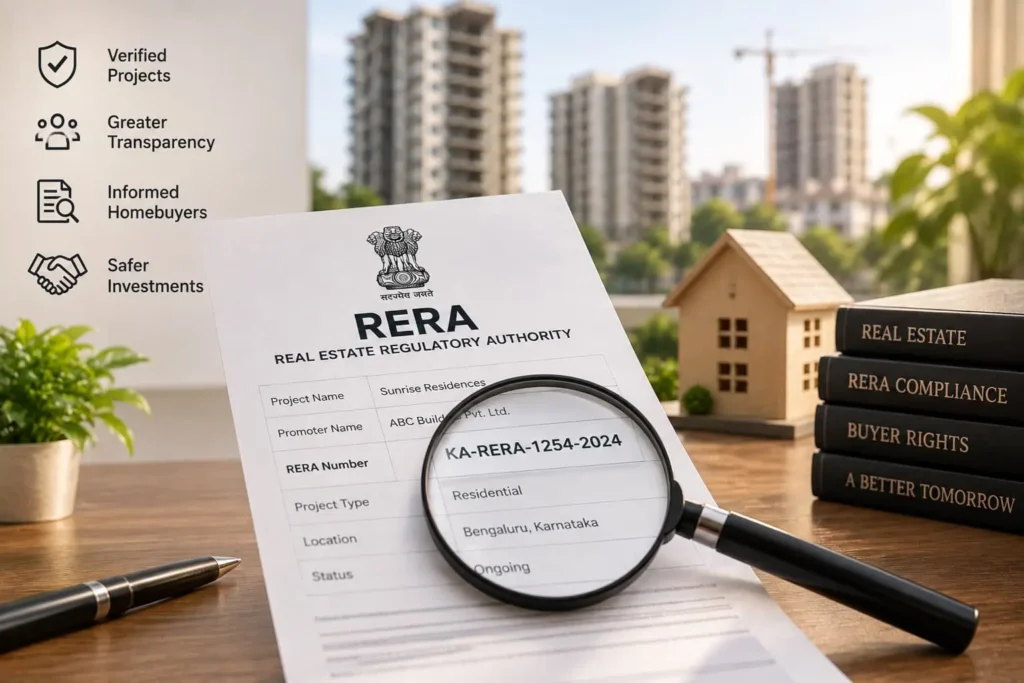
Identify the official RERA authority for the state or union territory where the property is located. For properties in Karnataka, homebuyers can check project registration and related information through the Karnataka RERA official portal.
Step 2: Search for the Project
Use the project name, promoter name, registration number, or other available search options on the official portal.
Step 3: Verify the Details
Check whether the information displayed on the official portal matches the information provided by the developer.
Pay attention to:
- Project name
- Promoter name
- Registration number
- Project location
- Project status
- Declared completion information
- Other available project details
Step 4: Save Important Information
Keep a copy or record of the relevant RERA registration details for your property records.
If you are considering a property, reviewing this information before paying a booking amount can be a useful precaution.
Is RERA Registration a Guarantee That a Property Is Completely Risk-Free?
No.
This is an important point for every homebuyer.
RERA registration does not mean that a property is automatically risk-free or that every promise made by a developer is guaranteed.
Buyers should still conduct their own due diligence.
RERA registration is one important layer of regulatory oversight and information disclosure, but buyers should also verify title, approvals, agreements, finances, construction progress, and other relevant factors.
For major property purchases, professional legal and financial advice can also be valuable.
What Should You Check Besides RERA Registration?
Before booking a property, don’t stop after checking the RERA number.
Consider asking the developer for relevant documents and information regarding:
Property Title
Understand who owns the land and whether the developer has the necessary rights to develop the property.
Approvals
Check the approvals and permissions applicable to the project.
Agreement for Sale
Read the agreement carefully, including payment terms, possession provisions, specifications, and obligations of both parties.
Project Progress
If construction is underway, compare the actual progress with the information disclosed for the project.
Financial Commitments
Understand the total cost, payment schedule, taxes, registration charges, maintenance charges, and other applicable expenses.
Final Thoughts
RERA registration is important when buying a property because it gives homebuyers access to a regulatory framework designed to improve transparency, accountability, and protection in the real estate sector.
By checking a project’s RERA registration, buyers can verify important project and promoter information and conduct better due diligence before making a significant financial commitment.
However, RERA registration should not be considered a substitute for complete property verification. A smart homebuyer should also review the property’s legal documents, approvals, agreement for sale, project progress, financial commitments, and other relevant details.
The best property decision is an informed one. Take the time to research the project, ask questions, verify information, and understand the documents before booking your home.
Frequently Asked Questions
Is RERA registration mandatory for all properties?
RERA applies to eligible real estate projects and promoters, but the Act contains certain exemptions and conditions. Buyers should check whether the specific project falls within the applicable RERA requirements.
Why should I check RERA registration before buying a property?
Checking RERA registration can help you verify important project and promoter information and understand the disclosures available through the relevant regulatory authority before making a purchase.
Does RERA registration guarantee timely possession?
RERA establishes obligations and remedies relating to possession, but registration itself should not be treated as an absolute guarantee that there will never be a delay.
Can I complain against a RERA-registered builder?
For eligible disputes, a homebuyer may be able to approach the relevant RERA authority. The available remedy depends on the facts of the case and applicable law.
Where can I check a property’s RERA registration?
You should use the official RERA website of the state or union territory where the project is located. Search using the project name, promoter name, or RERA registration number where available.