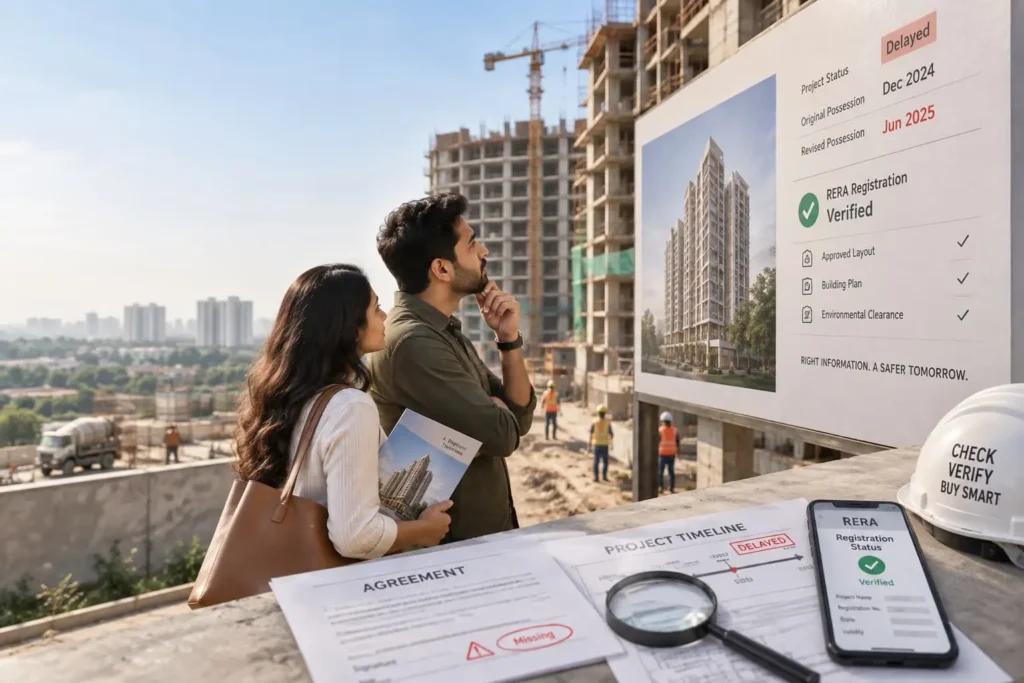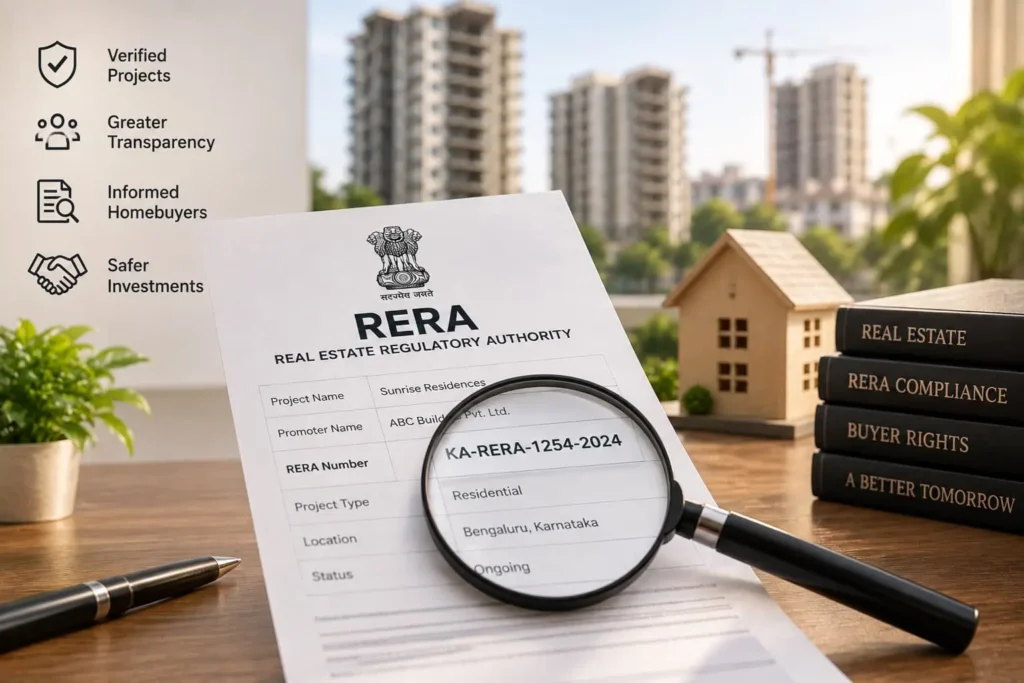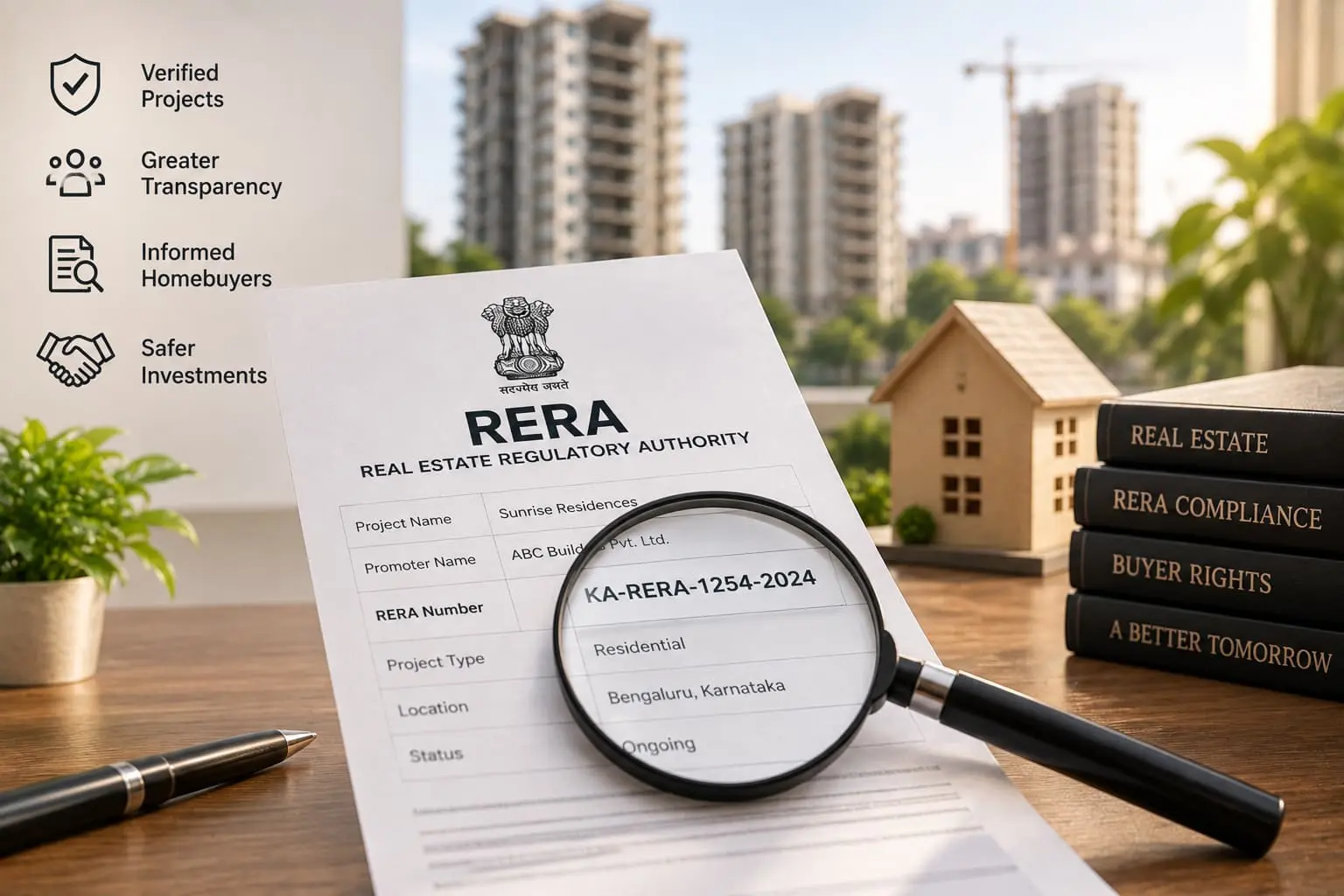
A RERA number helps homebuyers verify important details about a registered real estate project. Learn how to check it, what information it provides, and why verifying the number matters before booking a property.
Buying a property involves more than comparing prices, locations, floor plans, and amenities. Before making a booking or paying a substantial amount, homebuyers should also verify whether the project is registered under the applicable real estate regulations.
One of the most useful details to check is the RERA registration number.
But what exactly is a RERA number? Where can you find it? What information can you verify with it? And does having a RERA number automatically mean that a property is completely safe to buy?
In this guide, we explain everything homebuyers should know about a RERA number and why checking it should be an important part of your property research.
What Is a RERA Number?
A RERA number is a unique registration reference assigned to a real estate project registered with the relevant state or Union Territory Real Estate Regulatory Authority under the Real Estate (Regulation and Development) Act, 2016.
RERA was introduced to bring greater transparency and accountability to the real estate sector and to protect the interests of homebuyers.
When a project is registered, the relevant RERA authority maintains information about that project on its official portal, subject to the information and documents required under the applicable rules.
In simple terms, a RERA registration number helps you identify a registered real estate project and verify its official project details.
For a homebuyer, this number can be a useful starting point when researching a property before making a purchase decision.
Why Does a RERA Number Matter to Homebuyers?
A RERA number is important because it gives buyers a way to independently check project information instead of relying only on advertisements or information provided by a sales representative.
When you search for a registered project on the relevant RERA website, you may be able to find information such as:
- Project name
- Promoter or developer details
- Project location
- Registration details
- Project status
- Proposed completion information
- Building or development details
- Documents submitted for registration
- Updates related to the project, where applicable
The exact information available can vary between state RERA portals.
This information can help you make a more informed decision and identify questions that you may want to ask the developer before booking.
How Does a RERA Number Help You Verify a Property?
Imagine that you are interested in a new residential project. The developer provides you with a RERA registration number.
Instead of simply accepting the number, you can use it to search the project on the relevant RERA portal.
You can then compare the registered information with what the developer has told you.
For example, you can check whether the:
Project name → Promoter → Location → Registration details → Project information
all correspond to the property you are considering.
If there is a difference between the information presented to you and the information available on the official RERA portal, it is worth asking the developer for clarification.
Where Can You Find a RERA Number?
A project’s RERA registration number may be displayed in several places, including:
- Developer’s website
- Project website
- Property brochure
- Marketing materials
- Project advertisements
- Sales documentation
- RERA authority’s official website
However, simply seeing a RERA number in a brochure or advertisement is not enough.
Homebuyers should verify the number through the official RERA portal of the relevant state or jurisdiction.
This helps ensure that the registration details actually correspond to the project being offered to you.
How to Check a RERA Number Online
Checking a RERA registration number is generally a straightforward process, although the exact steps and website interface can vary from one state to another.
Step 1: Identify the Relevant State RERA Authority
First, identify the state or Union Territory where the property is located.
The applicable RERA authority depends on the property’s jurisdiction.
Step 2: Visit the Official RERA Portal
Go to the official website of the relevant RERA authority.
Look for an option such as Registered Projects, Project Search, Search Project, or a similar facility.
Step 3: Enter the RERA Registration Number
If you have the project’s RERA number, enter it into the available search field.
Some portals may also allow you to search using the project name, promoter name, or other details.
Step 4: Review the Project Information
Once you find the project, carefully review the available information.
Pay attention to details such as the promoter, project name, location, registration status, and completion-related information.
Step 5: Compare the Details
Finally, compare the RERA information with the documents and information provided by the developer.
If everything matches, you have completed an important part of your initial property verification.
What Information Can You Check Using a RERA Number?
One of the biggest benefits of checking a RERA registration is the access it can provide to official project information.
Depending on the applicable RERA authority and the project’s records, you may be able to verify:
1. Project Details
You can check the registered name and other basic details of the project.
2. Promoter Information
The RERA record can help you identify the registered promoter or developer associated with the project.
3. Project Location
Checking the registered location can help you determine whether the RERA record corresponds to the property you are actually considering.
4. Project Status
Available project information may help you understand the development status and other updates recorded on the portal.
5. Completion Information
You may be able to find the proposed completion date or other relevant completion information, depending on the applicable portal and project records.
6. Project Documents
Some RERA portals provide access to documents and other information submitted as part of project registration.
This can be useful when conducting your initial research.
Is a RERA Number the Same as Property Approval?
No.
A RERA registration number should not be confused with every approval, licence, certificate, or permission required for a real estate project.
Real estate development can involve several legal and regulatory requirements.
RERA registration is an important part of the regulatory framework, but it does not mean that buyers should stop checking other relevant documents.
Before purchasing a property, buyers should consider reviewing the title, approvals, sanctioned plans, agreements, payment terms, and other relevant documents.
Where necessary, professional legal advice can help you understand documents and potential risks.
Does Every Property Have a RERA Number?
No, not every property or real estate transaction will necessarily have a RERA registration number.
The RERA Act contains provisions regarding projects that are required to be registered as well as certain exemptions. The applicable rules can also vary by jurisdiction.
Therefore, if a property does not have a RERA number, it is important to understand why before making assumptions.
If a developer tells you that a project is RERA registered, ask for the registration details and verify them on the relevant official RERA portal.
What Should You Check Besides the RERA Number?
A RERA number is an important verification point, but it should not be the only thing you check before purchasing a property.
Consider reviewing the following:
Project and Promoter Details
Make sure the project and developer details correspond with the official RERA information.
Location
Confirm that the registered project location matches the property being marketed to you.
Project Timeline
Compare the project’s available completion information with the possession timeline communicated by the developer.
Legal Documents
Review relevant title and property documents and obtain professional advice when required.
Approvals
Check the approvals and permissions applicable to the project.
Sale Agreement
Read the agreement carefully before signing. Pay attention to the payment schedule, possession provisions, obligations of both parties, and other important clauses.
Payment Details
Understand exactly what you are paying for, when payments are due, and what charges are included.
What If the RERA Number Does Not Match?
Suppose a developer gives you a RERA number, but when you search for it, the project name, promoter, or location does not match.
Do not ignore the difference.
First, double-check that you entered the registration number correctly.
Then compare:
- Project name
- Promoter name
- Location
- Registration details
- Project phase
- Other available project information
There may be legitimate reasons for differences, such as separate registrations for different phases of a development. However, you should ask the developer to clearly explain any discrepancy before making a payment.
If you cannot establish that the registration details relate to the property you are purchasing, consider seeking independent professional advice before proceeding.
Common Mistakes Homebuyers Should Avoid
Mistake 1: Trusting the RERA Number Without Checking It
A number printed on a brochure should not automatically be considered verified.
Always check the number on the relevant official RERA portal.
Mistake 2: Checking Only the Project Name
Similar project names can sometimes create confusion.
Check the project name, promoter, location, and other available details together.
Mistake 3: Ignoring Different Project Phases
Large developments may have different phases or registrations. Make sure the RERA information relates to the particular phase or development you are purchasing.
Mistake 4: Assuming RERA Registration Guarantees Everything
RERA registration is an important regulatory safeguard, but it does not replace proper legal, financial, and property due diligence.
Mistake 5: Not Keeping Documents
Keep copies of your booking documents, payment receipts, agreements, advertisements, correspondence, and other important records.
Having proper documentation can be valuable if questions or disputes arise later.
Can RERA Registration Help If There Is a Dispute?
RERA provides a regulatory framework for addressing certain disputes and violations involving real estate projects and promoters.
Depending on the circumstances and applicable state procedures, eligible buyers may have options to approach the appropriate RERA authority or adjudicating mechanism.
If you ever need to pursue a complaint, maintaining proper documentation can be important.
Useful records may include:
- Booking forms
- Agreements
- Payment receipts
- Emails
- Messages
- Advertisements
- Project brochures
- Promises or commitments made by the developer
- Relevant RERA project information
If you are unsure about your legal position, consider consulting a qualified professional.
RERA Number vs RERA Registration: What’s the Difference?
The terms RERA number and RERA registration are often used together, but they refer to slightly different things.
RERA registration is the process through which a qualifying real estate project is registered with the applicable authority.
The RERA number is the registration reference associated with that registered project.
So, when someone asks for the RERA number of a project, they are generally asking for the project’s registration reference.
A Simple RERA Verification Checklist
Before booking a RERA-registered property, use this quick checklist:
☑ Ask the developer for the RERA registration number.
☑ Visit the relevant official RERA website.
☑ Search for the registration number.
☑ Verify the project name.
☑ Verify the promoter or developer.
☑ Check the project location.
☑ Review available project information and documents.
☑ Check project status and available completion information.
☑ Compare the RERA information with the developer’s documents.
☑ Review the sale agreement and other legal documents.
☑ Seek professional advice when necessary.
Final Thoughts
A RERA number is more than just a number printed on a property brochure. For homebuyers, it can be an important reference for verifying a registered real estate project and accessing information available through the relevant RERA authority.
Before booking a property, take a few minutes to check the project’s RERA registration and compare the information with what the developer has provided.
At the same time, remember that RERA verification is only one part of responsible property buying. Legal documents, approvals, project details, agreements, payment terms, and other important aspects should also be reviewed before making a major financial commitment.
A little verification before booking can help you make a more informed decision about your future home.
Frequently Asked Questions
1. What is a RERA number?
A RERA number is the registration reference assigned to a qualifying real estate project registered with the relevant state or Union Territory RERA authority.
2. Why is a RERA number important?
It helps homebuyers identify and verify a registered project and review information available through the relevant RERA authority.
3. How can I check a RERA number online?
Visit the official RERA portal for the state or jurisdiction where the project is located and use the available project search facility.
4. Can I check a project without knowing its RERA number?
Many RERA portals allow searches using information such as the project name or promoter name, although the available search options vary by state.
5. Does RERA registration guarantee that a property is safe to buy?
No. RERA registration is an important verification point, but buyers should also conduct appropriate legal, financial, and property due diligence.
6. What should I do if the RERA details don’t match the property?
Check the information carefully and ask the developer to explain the discrepancy. If the issue remains unclear, consider seeking independent professional advice before making a payment.
7. Is the RERA number the same for every project?
No. Each registered project has its own registration reference, and different phases of a larger development may have separate registrations where applicable.