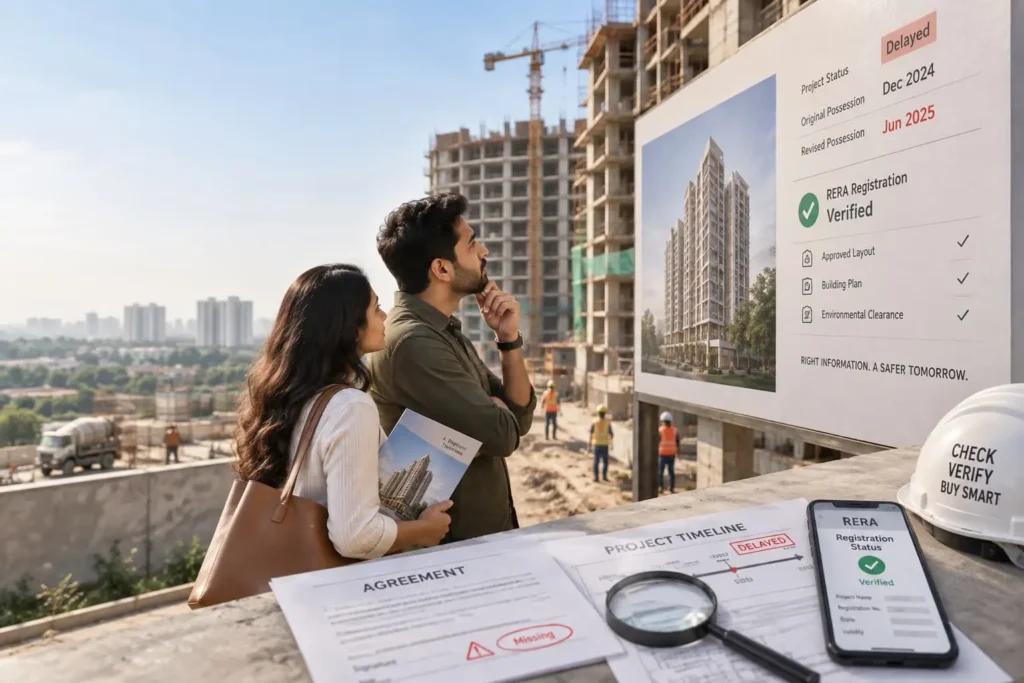
Buying a home is a major financial decision, and checking information about a property before making a booking is an important part of the process.
One of the most useful resources available to homebuyers is the RERA website of the state or Union Territory where the property is located.
But what can you actually find on a RERA website?
From project registration and developer details to project status, approvals, carpet area, and completion timelines, a RERA portal can provide valuable information that helps you research a property before making a decision.
In this guide, we explain the key information you can find on a RERA website and how it can help you as a homebuyer.
What Is a RERA Website?
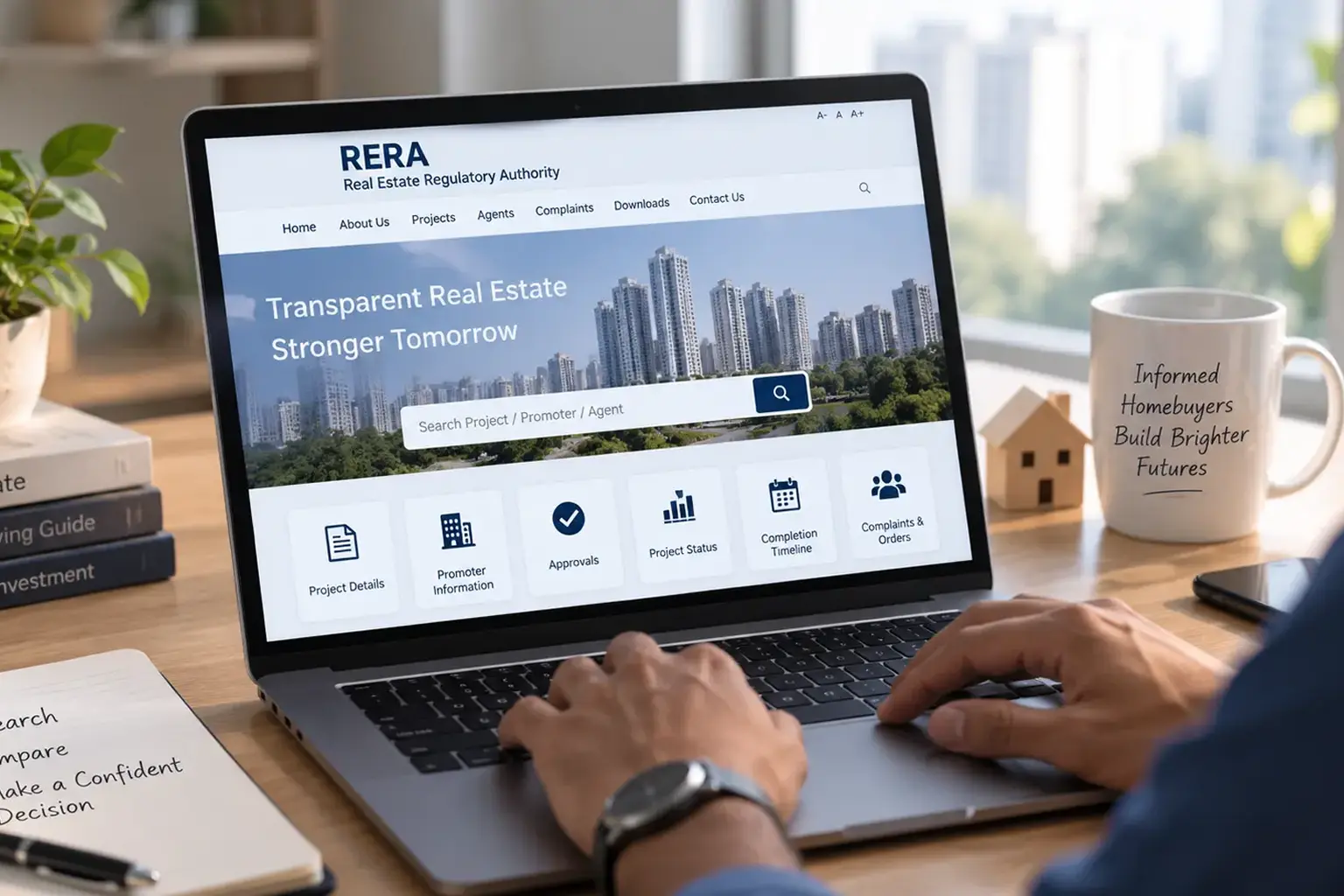
RERA websites are online portals operated by the respective Real Estate Regulatory Authority of a state or Union Territory.
The Real Estate (Regulation and Development) Act, 2016 requires promoters of applicable registered projects to provide specified project information to the regulatory authority. Certain information is then made available through the authority’s website for public access.
The exact design and available features can vary from one state or Union Territory to another, but the purpose is generally the same: to improve transparency in the real estate sector and help buyers make more informed decisions.
What Information Can You Find on a RERA Website?
Here are some of the most useful details you can check.
1. Project Registration Details
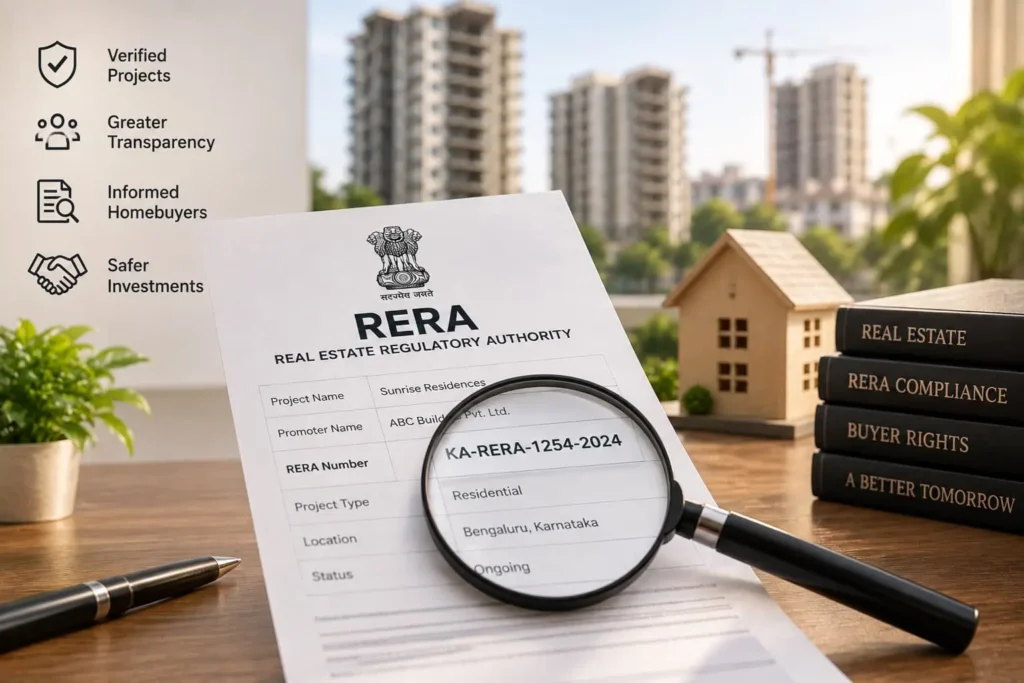
The first thing you can check is whether an applicable project is registered with the RERA authority.
A registered project generally has a RERA registration number, which can be used to identify the project on the relevant portal.
You can search using details such as:
- Project name
- Promoter or developer name
- RERA registration number
- Location or other search filters, depending on the portal
Before booking a property, verifying the project on the official RERA website is a useful first step.
2. Developer or Promoter Information
RERA portals can provide information about the promoter or developer associated with a registered project.
This can help you confirm that the project you are considering matches the developer information available on the official record.
For a homebuyer, this is useful because advertisements and sales materials may not always provide the complete picture.
3. Project Location and Details
A RERA project record can contain important information about the project’s location and development.
The information submitted under the Act can include project location details and other information relating to the land and proposed development.
This allows buyers to compare the official project information with what they have been told by the developer or sales team.
4. Approved Plans and Project Specifications
Depending on the information made available through the relevant RERA portal, buyers may be able to review details relating to:
- Sanctioned plans
- Layout plans
- Project specifications
- Development works
- Proposed facilities and amenities
RERA requires promoters to submit specified plans, specifications, and development information as part of project registration.
This can help a buyer understand what has officially been proposed for the project.
5. Carpet Area and Apartment Details
Another important piece of information is the carpet area of the apartments.
RERA registration information can include the number and type of apartments and their carpet area, along with certain exclusive balcony, verandah, or open terrace areas where applicable.
This is especially useful when comparing two properties.
Instead of looking only at the advertised size, check the actual carpet area and understand what you’re getting for your money.
6. Project Completion Timeline
One of the most important things for a homebuyer is knowing when the project is expected to be completed.
The promoter is required to provide the time period within which the project or phase is proposed to be completed. The project information can also include updates on its status.
Checking the registered timeline can help you compare it with the possession date communicated by the developer.
7. Project Status and Progress Updates
RERA portals can also provide updates about the status of registered projects.
Under the Act, promoters are required to provide periodic updates including project status and certain information about bookings, approvals, and other project-related matters.
This can give homebuyers a better understanding of how a project is progressing.
8. Approvals and Pending Approvals
Information about approvals can also be important when researching a property.
RERA project information can include details of approvals taken and approvals that are pending after the commencement certificate, where applicable.
Rather than relying only on verbal assurances, buyers can review the information available through the official portal.
9. Real Estate Agent Details
If a real estate agent is associated with the project, relevant registration information may also be available.
The RERA registration framework includes information about the names and addresses of real estate agents associated with the proposed project.
This can help buyers verify whether the agent they are dealing with matches the information associated with the project.
10. Complaints and Orders
Many RERA portals also provide sections where users can search for complaints, orders, or decisions issued by the authority.
This can be useful if you want to understand whether there have been regulatory proceedings associated with a project or promoter.
The exact search options and information available will vary depending on the state or Union Territory’s RERA portal.
Why Should Homebuyers Check a RERA Website?
Checking the RERA website should be part of your property research process.
It can help you:
- Verify project registration
- Check developer information
- Understand the registered project details
- Review project timelines
- Check available approval information
- Compare carpet area and apartment details
- Review project updates
- Find relevant complaints or orders where available
Most importantly, it gives you an opportunity to verify information instead of relying only on advertisements or sales conversations.
How to Use a RERA Website Before Buying a Home
You don’t need to spend hours researching every detail.
A simple process can be:
Step 1: Find the official RERA website for the state or Union Territory where the property is located.
Step 2: Search for the project using its name, developer name, or RERA registration number.
Step 3: Check the project registration details.
Step 4: Review the developer, project location, carpet area, approvals, and completion timeline.
Step 5: Compare the information with the details provided by the developer or sales representative.
Step 6: Save important documents and records for your reference.
This basic check can help you make a more informed property-buying decision.
Final Thoughts
A RERA website is more than just a place to check a registration number. For homebuyers, it can be a valuable source of information about a registered real estate project.
Before investing your money, take some time to check the project registration, developer details, carpet area, approvals, project status, and completion timeline available on the relevant RERA portal.
A few minutes of research today can help you ask better questions and make a more confident decision about your future home.
At Infantry Homes, we believe that an informed homebuyer is a confident homebuyer.