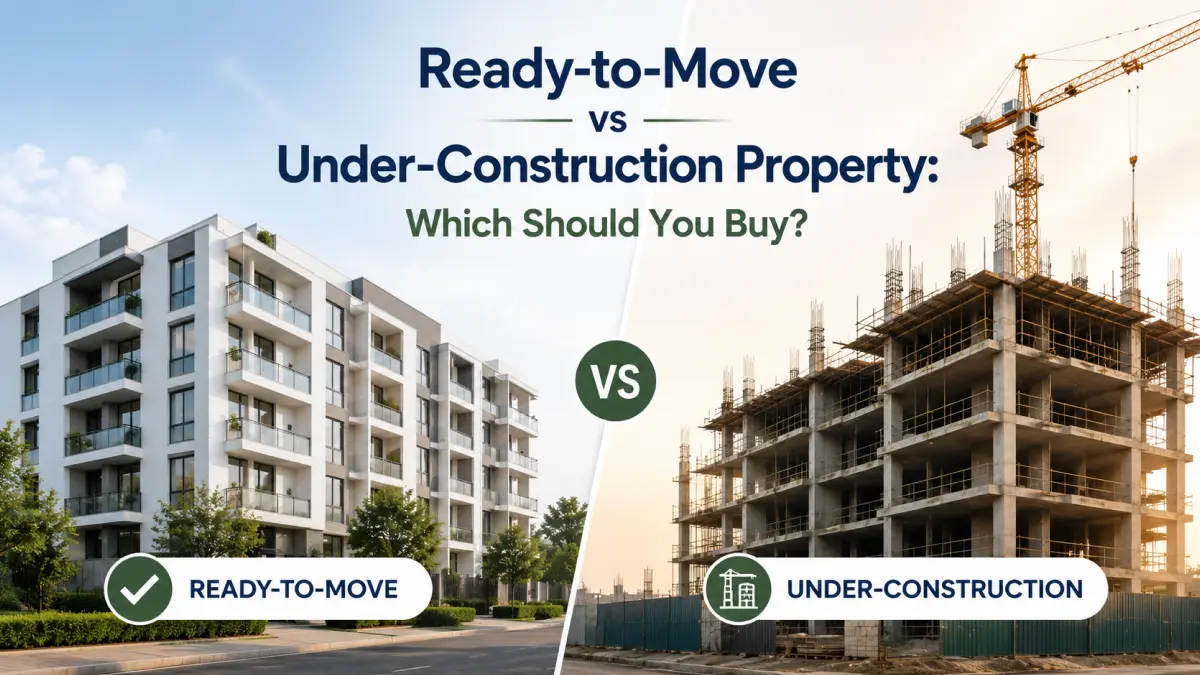
Choosing between ready to move vs under construction property is one of the first big decisions every homebuyer in Bengaluru faces. Both options can be a smart buy. But they suit very different needs, budgets and timelines.
A ready home gives you the keys today, with no waiting and no surprises. An under-construction home usually costs less and gives you time to pay, but you have to wait, and you carry some risk.
In this guide, we compare ready to move vs under construction homes on price, taxes, risk, home loans and returns. By the end, you will know which side of the ready to move vs under construction choice fits your family and your finances.
What Is a Ready-to-Move Property?
A ready-to-move property is a finished home that you can move into right away. The building is complete, and the developer has received the Occupancy Certificate (OC) from the planning authority.
You can walk through the actual flat, check the view, sunlight and finishing, and talk to people who already live there. What you see is exactly what you get.
What Is an Under-Construction Property?
An under-construction property is a home you book while the building is still being built. You pay in stages, linked to construction progress, and get possession later. That is usually 2 to 5 years after booking.
You choose your flat from plans, brochures and a sample flat. The final home is delivered on the possession date promised in your agreement and registered with RERA.
Ready to Move vs Under Construction: Quick Comparison
This table sums up the ready to move vs under construction choice at a glance.
| Factor | Ready-to-move | Under-construction |
|---|---|---|
| Price | Higher | Usually 10–20% lower |
| GST | None (with OC) | 5% (1% for affordable homes) |
| Possession | Immediate | 2–5 years |
| Payment | Large amount upfront | Paid in stages over time |
| Rent saving | Starts immediately | You may pay rent and EMI together |
| Risk of delay | None | Possible |
| What you see | The actual flat | Plans and a sample flat |
| Choice of units | Limited, often leftover units | Wide choice of floors and views |
| Price growth before possession | Already priced in | Possible gain by completion |
| Best for | Families who need a home now | Buyers who can wait and want a lower price |
Price and Total Cost
Price is usually the first point in any ready to move vs under construction comparison. Under-construction flats are often 10–20% cheaper, especially at launch. Developers offer lower prices early because they need funds to build.
But the flat price is not the full story. Look at the total cost.
GST
- Ready-to-move with OC: No GST.
- Under-construction (non-affordable): 5% GST, without input tax credit.
- Under-construction (affordable housing): 1% GST. In metro cities like Bengaluru, this applies to homes priced up to ₹45 lakh with a carpet area of up to 60 sq m.
On a ₹1 crore under-construction flat, 5% GST adds ₹5 lakh. That can wipe out a large part of the launch discount.
Stamp Duty and Registration
These apply to both types. In Karnataka, stamp duty is 5% plus cess for properties above ₹45 lakh. The registration fee has been 2% since 31 August 2025, as reported by Deccan Herald. Together, these come to about 7.6% of the property value.
Rent While You Wait
If you live on rent, an under-construction home means paying rent and an EMI or pre-EMI at the same time. At ₹30,000 a month, three years of rent adds up to over ₹10 lakh.
Bottom line: On cost alone, the ready to move vs under construction gap is often smaller than it looks once you add GST and rent.
Risk and Peace of Mind
Risk is where the ready to move vs under construction difference is clearest.
Ready-to-Move Homes
The construction risk is gone. But you still need to check the documents, especially the OC, the e-Khata and the title. Read our property documents checklist before you buy.
Under-Construction Homes
The main risks are:
- Delay in possession, which means more rent and EMI pressure.
- Changes in the final product, such as a smaller carpet area or different specifications.
- Developer financial trouble, which can stall the project.
RERA has reduced these risks a lot. The developer must register the project, keep 70% of buyer money in a separate account, and pay you interest if possession is delayed. Learn more in our Karnataka RERA guide.
Even so, the developer’s track record matters most. Choose builders with a strong history of on-time delivery.
Home Loans and Tax Benefits
Home loans work a little differently in a ready to move vs under construction purchase.
- Ready-to-move: The bank pays the full loan at once, and your full EMI starts right away.
- Under-construction: The bank pays the developer in stages. Until possession, you can choose to pay only the interest on the amount released (pre-EMI), or start the full EMI.
For tax, under the old tax regime:
- Interest: You can claim up to ₹2 lakh a year on home loan interest for a self-occupied home under Section 24(b). It applies only after you get possession.
- Interest paid before possession: Can be claimed in five equal parts from the year of possession, within the same ₹2 lakh limit.
- Principal: Repayment counts under Section 80C only after possession.
So a ready home gives you tax benefits from the first year. The new tax regime does not allow these deductions for a self-occupied home, so check with your tax advisor.
Returns and Appreciation
In the ready to move vs under construction debate, investors often prefer under-construction projects. If you buy early at a launch price and the area grows, the value can rise by the time the project is complete.
Ready homes start earning from day one. If you plan to rent it out, a ready flat gives you rental income immediately, with no waiting period.
For a long-term investor, under-construction can offer better growth. For someone who wants rental income now, a ready home is usually better.
Ready to Move vs Under Construction: Which Should You Buy?
There is no single right answer to the ready to move vs under construction question. Use this simple guide.
Choose a Ready-to-Move Home If You:
- need to move in within the next few months
- are paying high rent and cannot manage rent and EMI together
- want to see the actual flat before you pay
- want tax benefits from the first year
- prefer zero construction risk
Choose an Under-Construction Home If You:
- can wait 2–4 years for possession
- want a lower entry price and a stage-wise payment plan
- want a wider choice of floors, views and layouts
- are buying mainly as a long-term investment
- are buying from a reputed developer with a strong delivery record
5 Tips Before You Choose Ready to Move vs Under Construction
- Compare the total cost, not the flat price. Add GST, stamp duty, registration and rent.
- Check the RERA possession date, not the date the sales team promises.
- Visit completed projects of the same developer to judge quality and delivery.
- For a ready flat, insist on the OC before you pay.
- Plan your cash flow for the full period until possession.
If you are still shortlisting, read our guide on how to choose the right residential property in Bengaluru.
Frequently Asked Questions
Which is better: ready to move vs under construction?
It depends on your needs. A ready home is better if you need to move in soon or want zero risk. An under-construction home is better if you can wait and want a lower price.
Which is better for investment: ready to move vs under construction?
For long-term growth, an under-construction home bought early from a reputed developer often appreciates more. For immediate rental income, a ready home is better because it can be rented out from day one.
Is GST payable on a ready-to-move flat?
No. If the building has received its Occupancy Certificate, no GST is charged. You pay only stamp duty and registration.
How much cheaper are under-construction flats?
They are usually 10–20% cheaper than similar ready flats. The exact gap depends on the location, the developer and how early you buy.
Is it safe to buy an under-construction flat in Bengaluru?
It is much safer since RERA. Buy only RERA-registered projects from developers with a good delivery record, and read the agreement carefully.
Can I claim tax benefits on an under-construction home?
Yes, but only after possession. Under the old tax regime, interest paid before possession can be claimed in five equal parts from the year you get possession.
Conclusion
The ready to move vs under construction decision comes down to three things: how soon you need the home, how much risk you can take, and your total budget. A ready home offers certainty and immediate savings on rent. An under-construction home offers a lower price and more choice, if you can wait.
At Infantry Homes, we help you compare both options side by side. We offer ready homes like SLV Sunshine in Jakkur, as well as new launches from A-grade developers, all RERA-approved.
Not sure which is right for you? Explore our handpicked projects or talk to an Infantry Homes advisor. Call +91 90715 67747 for a free consultation.
Tax and fee rates can change. Confirm current rates with your tax advisor or bank before you decide.