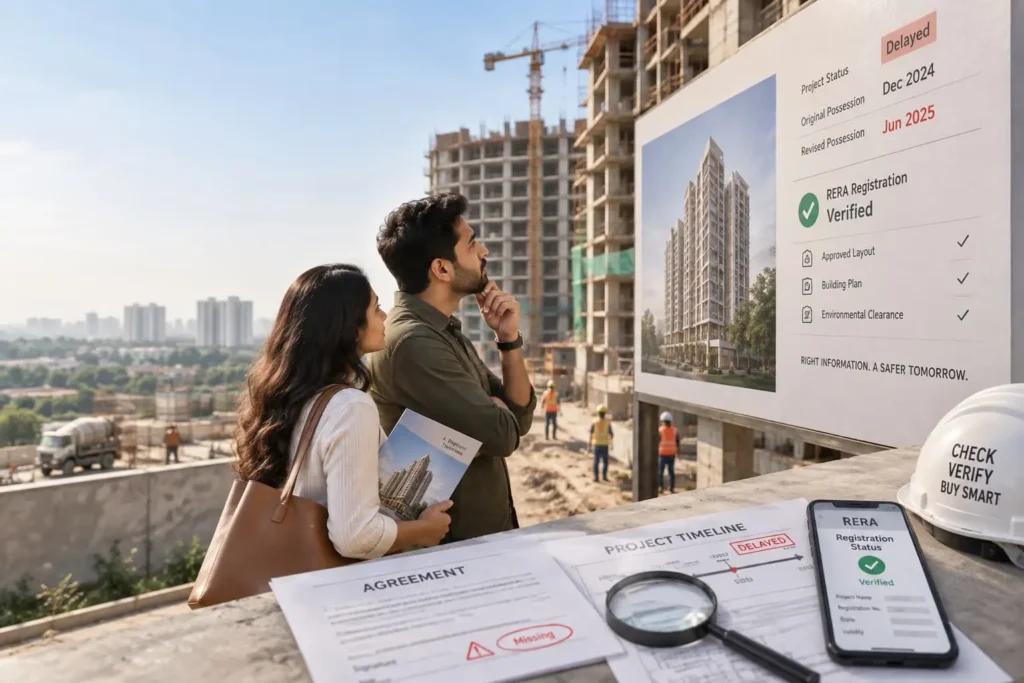
Common RERA Mistakes Homebuyers Should Avoid
Buying a home is one of the biggest financial decisions you can make. While the Real Estate (Regulation and Development) Act, 2016 (RERA) has introduced important protections for homebuyers, simply choosing a RERA-registered property does not mean every part of the buying process can be taken for granted. Homebuyers still need to verify project details, understand the agreement, check important documents and keep track of payment and possession commitments. Many property-related problems happen because buyers rush through these steps or rely entirely on verbal promises. Understanding the common RERA mistakes homebuyers should avoid can help you make a more informed decision and reduce unnecessary problems later. In this guide, we look at the mistakes buyers should watch out for before booking or purchasing a property. 1. Not Checking the Property’s RERA Registration One of the most common mistakes is assuming that a project is RERA registered without independently verifying it. A buyer should check the project’s registration details on the relevant state RERA authority’s official website. The registration information can help you verify details such as the project’s name, promoter, location, registration number and other project-related information. Do not rely only on a brochure, advertisement or sales representative’s statement. What you should do: This simple step can help you avoid a major mistake before making a financial commitment. 2. Assuming RERA Registration Means You Don’t Need to Verify Anything Else RERA registration is important, but it should not replace your own due diligence. Some buyers think that because a project is RERA registered, they do not need to check documents, approvals, agreements or other property details. That is a mistake. RERA provides an important regulatory framework, but buyers should still carefully examine the information relevant to their purchase. Before booking, consider checking: Think of RERA registration as an important part of your property verification process—not the entire process. 3. Not Checking the RERA Carpet Area Another common mistake is focusing only on the property’s advertised size. Real-estate advertisements may mention different measurements, including super built-up area, built-up area and carpet area. These measurements are not the same. Under RERA, carpet area has a specific meaning and is an important figure for homebuyers to understand. Before making a decision, ask the builder or developer for the property’s RERA carpet area and compare it with the information in the relevant documents and agreement. Understanding carpet area can help you make a more meaningful comparison between different properties. 4. Relying Only on Verbal Promises Sales discussions can include many promises about amenities, specifications, possession dates, facilities and other features. A major mistake is assuming that everything discussed verbally will automatically become part of the legally relevant agreement. If something is important to your decision, ask for it in writing and check whether it is properly reflected in the relevant documents. For example, if a salesperson promises a particular facility or specification, do not depend only on a conversation. A good rule for homebuyers is simple: If an important promise affects your decision, make sure you can verify it in writing. Keeping written records can also be useful if there is a disagreement later. 5. Not Reading the Agreement Carefully Property agreements can be lengthy and contain many terms that buyers may overlook. Some buyers focus only on the property price and payment schedule and sign the agreement without reading the other clauses carefully. This can create problems later. Before signing, pay attention to: If you do not understand a clause, ask questions before signing. For significant property transactions, getting the agreement reviewed by a qualified legal professional can also be worthwhile. 6. Ignoring the Project’s Promised Timeline Possession timing is one of the most important considerations when buying a home. A buyer may see an attractive project and focus primarily on the location, price and amenities while paying less attention to the project’s completion timeline. Before booking, check the project’s stated completion or possession timeline and compare it with the information available through the relevant RERA records and your agreement. Do not rely only on statements such as: Always look for documented information. 7. Not Keeping Payment Records and Documents Another mistake is failing to maintain proper records throughout the purchase process. Homebuyers may make several payments over a long period. Keeping everything organized can make it much easier to track the transaction. Maintain copies of: It is also useful to maintain a dedicated digital folder for your property documents. Good record-keeping can become especially important if you need to resolve a dispute. 8. Paying Attention Only to the Property Price The advertised property price is not necessarily the only amount you will pay. Depending on the transaction and applicable rules, there may be additional costs associated with purchasing and owning a home. Before making a booking decision, ask for a clear breakdown of the total expected cost. Consider understanding: A clear cost breakdown can help you compare properties more realistically and avoid unexpected financial pressure. 9. Not Checking Changes to the Project Homebuyers should also pay attention to the project’s approved plans and information available through the relevant RERA authority. Buyers sometimes assume that the project will always look exactly as shown in an early brochure or presentation. However, property development involves approved plans, specifications and project-related documentation that should be reviewed carefully. If a particular amenity, layout or feature is important to you, verify the information rather than relying solely on marketing material. 10. Ignoring Communication From the Builder Once you purchase a property, do not stop paying attention to project-related communication. Keep track of important updates from the promoter, particularly those relating to: If you receive an important communication, read it carefully and keep a copy for your records. Ignoring notices can sometimes make an already complicated situation more difficult. 11. Not Understanding Your Rights Under RERA RERA gives homebuyers important rights and establishes responsibilities for promoters. However, many buyers do not take the time to understand what these rights actually mean. Depending on the circumstances and applicable provisions,